
From Southampton to New York · Northern Europe · 64 nights
From Southampton to New York
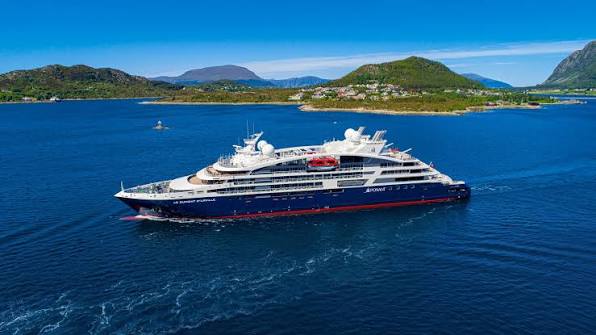
The first ship in Oceania’s Allura Class, Vista joined the fleet in 2023, with sister ship Allura setting sail in 2025. These ships represent an exciting evolution and offer elevated dining options, accommodation, and guest experience.
The Allura Class ships promise to enhance and redefine the
Oceania onboard experience, with chic residential-style
accommodation, all ocean facing with either French or full private
balcony, and a plethora of eye-catching public spaces that combine
dramatic architectural flourishes with the relaxed intimacy for
which Oceania is known. These are also the first Oceania ships to
include dedicated staterooms for solo travellers, and you can
expect innovative dining venues, a serene spa and a stunning pool
deck.
Southampton is the UK's leading port. Bustling modern cruise terminals, as well as wharfs and commercial harbours, line the waterfront, whilst the city itself is a fascinating mix of ancient and modern, with a picturesque old town, the original city walls still standing, and super-modern shopping centres and office complexes. On all corners you will see tributes to the city's rich history and maritime heritage. Henry V marched his troops through the Westgate on his way to the battle of Agincourt, The Mayflower sailed from here with a cargo of settlers to the New World, and the Titanic started her fateful voyage here.
Cosmopolitan Edinburgh, Scotland’s lovely capital, is located in spectacular countryside, always visible from the city centre. Striking architecture, lots to see and do, and great food mean that your time here will be very busy. And if your visit coincides with the Festival, you have a treat in store.
Invergordon’s deep natural harbour makes it a popular jumping off point for the Scottish Highlands, and most cruise ship visitors will head inland on excursions to Loch Ness, Culloden battlefield or the nearby city of Inverness, capital of the Highlands.
The flat, windswept Orkney Islands, just off the northeast coast of Scotland, have a distinctive Scandinavian heritage that’s discernible in everything from the unusual place names to the ancient Norse architecture of the capital, Kirkwall. Don’t miss the Ring of Brodgar, a fascinating Neolithic stone circle.
The Isle of Skye is one of Scotland’s most popular tourist destinations, thanks to a spectacular landscape of jagged peaks, misty moors and glassy lochs. The island’s biggest town is Portree, a pleasant little place with a colourful harbour.
Gritty Glasgow is Scotland's largest city, renowned for its culture, style and the friendliness of its people. With internationally-acclaimed museums and galleries, stunning architecture, vibrant nightlife, fantastic shopping and a diverse array of restaurants and bars, Glasgow has something for everyone.
The 1998 Good Friday Agreement was a watershed moment for Northern Ireland, and its rejuvenated capital is enjoying a surge in popularity. The new Titanic Belfast museum is the star attraction, while the city centre boasts some handsome Victorian architecture and a lively pub scene.
The city of Dublin has something for everyone with great shopping, beautiful Georgian architecture, lovely parks, galleries and museums. Everywhere you go you will be bowled away by the jovial Irish welcome. Don’t miss the chance to sample a local pint of Guinness.
The attractive town of Cobh is situated on an island in Cork Harbour, one of the largest natural harbours in the world. It’s a colourful place with an interesting history; Cobh was the main exit point for thousands who fled Ireland during the famine years, and it was also the final port of call for the ill-fated Titanic.
Le Havre was more or less flattened during World War II, which makes the city’s UNESCO World Heritage status all the more remarkable. Rebuilt by the Belgian architect Auguste Perret, Le Havre is now characterised by a striking modernist style; don’t miss the towering, concrete Église St-Joseph.
White Cliffs Country is a fascinating region, one packed with history and natural beauty. We think there is no sight like that of the stunning cliffs rising from the sea, topped by the fortifications of Dover Castle, and surrounded by lush green countryside.
Zeebrugge’s main attraction is its proximity to Bruges. This beautifully preserved old town is a magical maze of winding cobbled lanes, narrow canals and gorgeous gabled houses, and it’s no wonder so many visitors throng the streets in summer.
Amsterdam is one of our very favourite cities to visit, as well as also being a perfect base to explore the nearby landscape of windmills and dikes. There is a wealth of famous museums and galleries to choose from, such as the Van Gogh Museum, the Rijksmuseum and the Anne Frank House.
You might not expect to find a beach resort in Norway, but the sunny city of Kristiansand is where Norwegians go for a spot of fun by the seaside. There are plenty of family-friendly attractions, including a zoo, and it’s also a good base for exploring the pretty fishing villages of the south coast.
The intriguing city of Oslo, Norway’s capital, has so much to offer, from the open air Norwegian Folk Museum to the amazing Vigeland sculpture park, and from the Holmenkollen Ski Museum to the Munch Museum’s collection of memorable paintings. History, art and culture are what defines this lovely city.
Aarhus is Denmark’s second largest city, but it’s also a compact and likeable place with a burgeoning cultural scene and a large student population. The combination of superb restaurants, attractive cobbled streets and excellent museums make Aarhus an unexpected highlight of any cruise around the Baltic.
The Swedish port of Helsinborg occupies a strategic position at the narrowest point of the Öresund, the body of water that separates Sweden from Denmark. Sights include the impressive medieval Kärnan tower, and it’s a short ferry ride across the Öresund to the Danish city of Helsingør, home of Hamlet’s famous Kronborg Castle.
Wonderful Copenhagen is the perfect city to explore on foot, by bicycle or by water. Visit the bustling wharf at Nyhavn, enjoy the palaces, galleries and museums, wander through the amazing Tivoli Gardens, and if you have time, make the most of Copenhagen’s gastronomic revolution.
The old Hanseatic port of Rostock was heavily damaged in the Second World War, though attractive enclaves of historic architecture remain. The little village of Warnemünde, a suburb of Rostock, is home to one of the most appealing beaches on the Baltic coast. An excursion inland to Berlin is a popular option, though it's around 150 miles each way.
The ruggedly handsome island of Bornholm lies way out in the Baltic, closer to Sweden and Poland than the Danish mainland. It’s the sunniest place in Denmark, known for its intriguing rundekirke (round churches), sleepy fishing villages, traditional smokehouses and fantastic foodie scene.
The Baltic port of Gdynia is the gateway to Gdansk, a city that occupies an important place in 20th century history; the first shots of World War II were fired at the Westerplatte naval base, and it was amongst the shipyards of Gdansk that the Solidarity movement was born in the 1980s.
Klaipeda is Lithuania’s only major seaport, and served for a time as the capital of Prussia, when it was known as Memel. There is still a noticeable Germanic flavour to the architecture of the old town, and it’s only a short distance from both the spectacular dunes of the Curonian Spit and the lovely seaside town of Palanga.
Liepaja, Latvia’s third largest city, was a key naval base during both the Tsarist and Soviet eras, so the beautiful beach comes as something of a surprise. History buffs will enjoy exploring the old Karosta military district, while the city centre is home to some lovely art nouveau buildings and the impressive Holy Trinity Cathedral.
Riga, Latvia’s charming capital, is a highlight of any Baltic itinerary. The compact Old Town delights with its winding lanes and elegant spires, and the city is also home to one of Europe’s most impressive ensembles of Art Nouveau architecture.
The historic harbour city of Tallinn in Estonia is really quite captivating. Just the perfect size to explore on foot, its medieval (and UNESCO listed) town centre, with its cobblestone streets and a busy Town Hall Square, is the perfect introduction to Estonia’s rich history.
Finland’s lovely capital Helsinki is a maritime city, with the sea on three sides and almost 100 kilometres of shoreline, as well as around 300 islands. Its contemporary architecture and focus on modern design sit surprisingly well alongside its four hundred year history.
The buzzing city of Stockholm is the capital of Sweden. Many sights will delight; the busy waterfront, the cobbled streets in the Old Town, and the museums, palaces, gardens and galleries. And of course, just 20 minutes away, its archipelago of 30,000 islands offers a totally different experience.
The charming UNESCO-listed town of Visby is the capital of Gotland, the largest island in the Baltic. The photogenic cobbled streets and ruined Gothic churches are a reminder of the island’s fascinating history, invaded by both Germans and Danes and decimated by the Black Death in the 14th century.
Wonderful Copenhagen is the perfect city to explore on foot, by bicycle or by water. Visit the bustling wharf at Nyhavn, enjoy the palaces, galleries and museums, wander through the amazing Tivoli Gardens, and if you have time, make the most of Copenhagen’s gastronomic revolution.
Gothenburg, or Goeteborg locally, is Sweden’s laid back second city, a delightful mix of cobbled streets, neoclassical architecture and picturesque canals. The old town is full of history, with some interesting museums, and the thriving arts scene has helped to revitalise the city’s previously run-down industrial districts.
Haugesund dates back to Viking times, and the surrounding region is known as the birthplace of Norway, where King Harald Fairhair first united the country under one ruler. Highlights include the reconstructed Viking farm at Avaldsnes, the Arquebus War History Museum and the Haraldshaugen Monument.
Dramatically located at the head of the Aurlandsfjord, the picturesque little village of Flåm is a popular base for excursions into Norway’s great outdoors. Strike out into the surrounding countryside and you’ll find steep mountains, cascading waterfalls and bucolic farms, with some spectacular walking and cycling trails.
Beautiful Bergen, Norway’s former capital, is a perfect city to explore on foot. Bryggen – the old Hanseatic wharf, and a UNESCO World Heritage site – still has the old harbour timber buildings, whilst other attractions include the funicular up Mount Floyen and the busy fish market.
When Ålesund was destroyed by fire in 1904, the German Kaiser Wilhelm II agreed to foot the bill to rebuild it. The result was the stunning Art Nouveau architecture that you see today, which blends elements of the German 'Jugendstil' with Viking flourishes.
Seyðisfjörður is one of the highlights of Iceland’s Eastfjords, a cute collection of colourful houses at the head of a dramatic fjord. The backdrop of snowy mountains and cascading waterfalls makes this one of the most picturesque ports in Iceland, and the town is surprisingly cosmopolitan.
Akureyri is Iceland’s second city, though with just 18,000 inhabitants it’s really more of a small town. Situated on the north coast at the head of Iceland’s largest fjord, it’s a cute and quirky place that also serves as a base from which to explore the bubbling mud pools and lunar landscapes around Lake Mývatn.
Ísafjörður is the largest town in Iceland’s wild Westfjords, dramatically located on a spit of sand hemmed in by mountains on three sides. The town itself is fairly low key, and the main attraction is exploring the surrounding landscapes, such as the spectacular Hornstrandir Peninsula.
Capital of Iceland and gateway to this extraordinary volcanic island, modern Reykjavík is home to an impressive collection of interesting attractions and places of historic significance. Visit the impressive Hallgrímskirkja church, relax in a thermal pool, potter around the old harbour, and enjoy 24 hour daylight in the summer months.
The little fishing town of Grundarfjörður enjoys a picturesque setting on the Snæfellsnes Peninsula, surrounded by dramatic volcanic peaks and gushing waterfalls. The nearby Snæfellsjökull volcano, capped by a glacier, was made famous by Jules Verne in ‘Journey to the Centre of the Earth’.
Paamiut is known for its warm community spirit and remarkable wildlife, home to the country’s largest population of white-tailed eagles. Here, ancient trails wind through dramatic landscapes dotted with colourful historic houses that recall a past shaped by whaling and fur trading, while nearby waters offer chances to spot whales.
Greenland’s capital and largest town, Nuuk is positively cosmopolitan compared to the rest of this remote and isolated country. The setting amongst mountains and fjords is striking, and attractions include the Greenland National Museum and the picturesque Old Harbour.
Charlottetown, the charming provincial capital of Prince Edward Island, occupies an important place in Canadian history: it was here that the conference which led to the creation of the Canadian Confederation took place in 1864. The city also has a great culinary scene, making use of the island’s bountiful seafood and fresh produce.
Sydney is the only real city on Nova Scotia’s beautiful Cape Breton island, a former steel and coal town that is reinventing itself as a cultural and culinary hub. The revitalised waterfront area is particularly appealing, and there are some interesting Loyalist-era buildings in the city’s North End district.
The natural harbour at Halifax is the second largest in the world after Sydney, and this charming city has a proud maritime heritage. Take a stroll along the historic waterfront, delve into the vibrant arts scene or explore the beautiful coastal scenery of Nova Scotia.
Boston is one of the oldest cities in the USA, and in amongst the skyscrapers are plenty of red-brick buildings, a Georgian architecture that lends the city a distinctly European feel. Boston is also home to a wealth of cultural riches, including the superb Museum of Fine Arts, as well as the world famous Harvard University.
The Big Apple is one of the world’s most iconic, cosmopolitan cities, a place that everyone should visit at least once in their lifetime. From the lofty heights of the Manhattan skyscrapers to the hipster hangouts of resurgent Brooklyn, New York City buzzes with energy and excitement, and there’s never been a better time to visit.