From Colón to Panama City · Central America · 17 nights
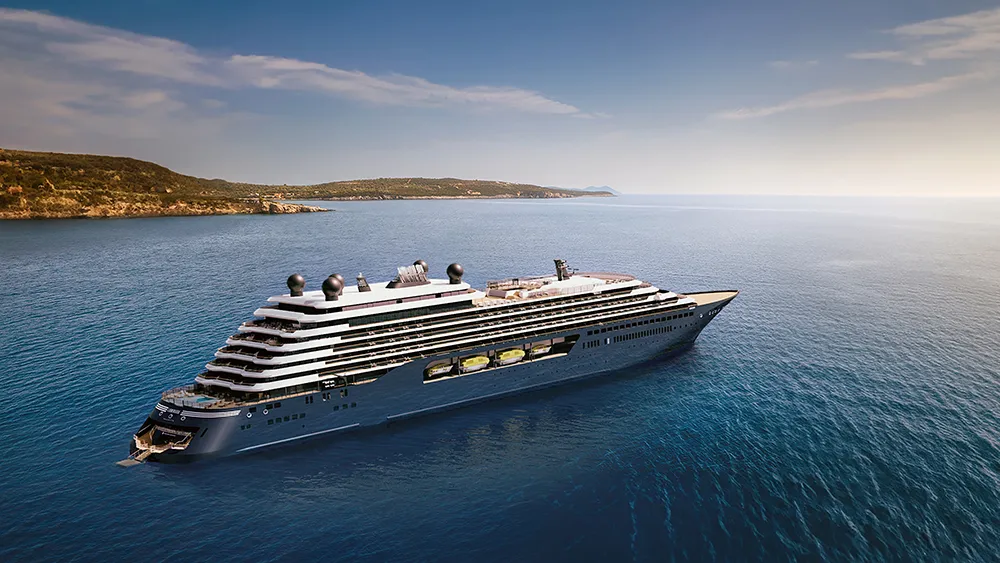
Part of Hapag-Lloyd Cruises’ award-winning fleet, MS Europa will operate bilingually in German and English beginning in January 2026, opening a whole host of exciting voyages for the English-speaking market and offering a laid-back small ship cruising experience.
MS Europa, like the rest of the Hapag-Lloyd Cruises fleet, is
awarded five stars year after year by Insight Guides Cruising &
Cruise Ships, formally the Berlitz Cruise Guide, and offers a
relaxed and stylish ambience on board. From January 2026, MS Europa
will operate bilingually, in German and English, opening up plenty
of exciting itineraries for our discerning guests.
Situated at the Atlantic entrance to the Panama Canal, Colón takes its name from Christopher Columbus, known in Spanish as Cristóbal Colón, although it's hard to imagine the famous explorer would find much reason to linger here nowadays. Once a thriving port, the city is now in a state of seemingly terminal decline, its colonial architecture crumbling and the modern city beset by social problems. It's not somewhere you will want to hang around for long, and serves merely as a gateway to the Canal, which will carry you to much nicer places.
Situated on Colombia’s Caribbean coast, Santa Marta is the oldest surviving Spanish colonial city in South America. The modern city lacks some of the charm of nearby Cartagena, but tourism has come on leaps and bounds in recent years, with a number of ambitious regeneration projects and a host of new restaurants and bars.
Cartagena was founded by Spanish conquistadors in 1533, and the beautifully preserved centre is a real highlight of Colombia’s Caribbean coast. The walled old town, the Ciudad Amurallada, is a camera-friendly collection of cobbled streets and colourful, colonial-era buildings.
Situated just off the coast of Panama, the idyllic San Blas islands are home to the Kuna Indians, who enjoy political autonomy from the mainland and have an unusual degree of control over tourism to their homeland. Visiting these simple island communities is a privilege, and an insight into an indigenous way of life unsullied by mass tourism.
Beautiful Isla Parida lies within the protected Gulf of Chiriquí National Park, its tranquil beaches lapped by warm, crystal clear waters where you’ll find an abundance of marine life. This is a great place to kick back and chill out for a day, in idyllic tropical surroundings.
The little town of Quepos is the gateway to Manuel Antonio National Park, a nature-lover’s paradise that’s home to monkeys, iguanas and the reclusive three-toed sloth. The area around Quepos also boasts some of the best beaches in Costa Rica, and the town itself has some nice restaurants.
Tortuga Island is actually made up of two separate islands just off the coast of the Nicoya Peninsula, both uninhabited and both absolutely stunning. Enjoy swimming and snorkelling in the clear, coral-rich waters, or relax on pristine white sand beaches.
Situated on a peculiarly shaped peninsula on the Gulf of Nicoya, Puntarenas is a popular weekend beach destination for residents of Costa Rica’s capital, San José. The port itself is not pretty, but the beachfront Paseo de los Turistas is a nice place to relax with a drink or enjoy a seafood lunch.
The port of Fuerte Amador sits at the southern edge of Panama City, near the Pacific entrance to the Panama Canal. The shining skyscrapers of the Panamanian capital are a testament to the city’s status as a key financial centre, while the tiny Casco Viejo is home to pretty colonial streets, hip hotels and happening bars.