From Dublin to Rosyth (Edinburgh) · Northern Europe · 11 nights
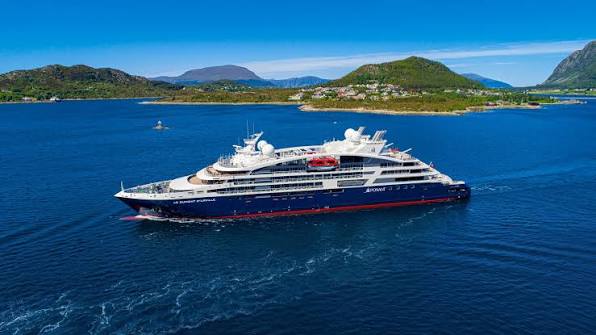
This little ship has an intimate style and personal service, and following a refurbishment in 2021 now offers both expedition and classic itineraries.
Silver Wind is a lovely size; with just 274 guests, she’s a
cruise ship in miniature, and an ice-strengthened hull allows her
to offer both expedition and classic voyages. You can expect all
the facilities and space of a larger ship, with the intimacy of a
small yacht. She’s comfortable in the middle of a great ocean, but
can also slip up rivers and into tiny harbours.
There is nothing like a visit to Ireland for a warm welcome, and in Dublin great literature, fascinating history and the friendly atmosphere make a stay here an unforgettable experience. The fair city of the song is a great place to meet the locals, enjoy the Georgian townhouses, explore the nooks and crannies of the castle, and of course to indulge in some serious retail therapy. And do seek out the Viking roots, medieval streets, city parks and beautiful bridges over the river Liffey - this is after all a great city to investigate on foot.
Rugged and unspoilt, peaceful and perhaps a little parochial, the Isle of Man is proud to be different. The island has its own government, the Tynwald, which is said to be the oldest continuous parliament in the world, as well as its own language and even its own currency, the Manx pound.
Lunga is the largest of the Treshnish Isles, a small archipelago off the west coast of Mull. The island has been uninhabited since the 19th century, and provides a haven for wildlife including puffins and seals. Lunga is also home to rare and endangered plants such as primroses and orchids.
The tiny island of Iona, situated off the southwestern tip of Mull, is said to be the cradle of Christianity in Scotland, and is a popular place of pilgrimage. Thousands of visitors flock here every year to visit the Abbey, and the island gets particularly busy in summer.
The outlying Shiant Isles are a key breeding site for seabirds, home to species including Atlantic puffins, razorbills, common guillemots and northern fulmars. The islands are also a haven for seals and basking sharks, and are said to be haunted by mythical creatures known as ‘kelpies’.
Loch Ewe is a sea loch off the coast of Wester Ross, and the shores were traditionally inhabited by Gaelic speakers who lived in crofting villages. The loch had an important role during the Second World War as the base for Arctic shipping convoys, and is also home to Scotland’s smallest whisky distillery.
The St Kilda archipelago is a remote and rugged collection of sea stacks and rocky islands, some 40 miles to the west of Benbecula in the Outer Hebrides. The islands constitute the largest nesting site for seabirds in the North Atlantic and are home to over a million birds, including puffins, gannets, fulmars and petrels.
Tórshavn, named after the Norse god Thor, is one of the world’s smallest capitals, with a population of just 20,000. The brightly coloured facades and turfed roofs lend the harbour an attractive, storybook quality, and the narrow streets are home to some atmospheric pubs and cafés.
The bird cliffs at Vestmanna are one of the most spectacular sights in the Faroe Islands, home to thousands of puffins, razorbills, guillemots and kittiwakes. Take a boat trip to explore the sea caves at the foot of the near-vertical cliffs, and marvel at the waterfalls that cascade down the rock face.
Lerwick is the only town of any size in the Shetland islands, and originally grew up around the herring trade. Highlights include the charming 18th century architecture along the waterfront and the informative Shetland Museum, which provides an excellent introduction to the history and culture of the islands.
Fair Isle is the UK’s most remote inhabited island, lying roughly halfway between Shetland and Orkney. The island is tiny, just 3 miles by 1½ miles, and is renowned for its traditional knitwear. It’s also a birdwatching hotspot, serving as both an important breeding ground for seabirds and as a stopping-off point for migrant species.
Cosmopolitan Edinburgh, Scotland’s lovely capital, is located in spectacular countryside, always visible from the city centre. Striking architecture, lots to see and do, and great food mean that your time here will be very busy. And if your visit coincides with the Festival, you have a treat in store.