From Busan to Kobe · Asia · 12 nights
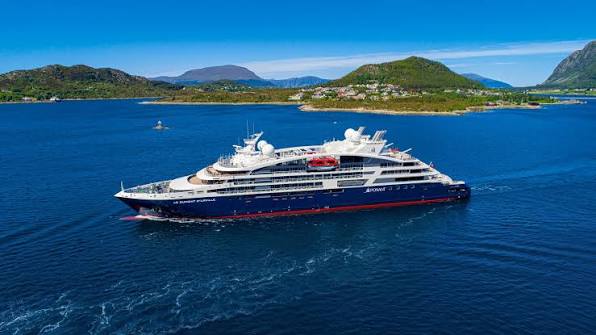
Sleek and stylish, Le Boréal, Le Soléal, L’Austral and Le Lyrial are wonderful small ships that blend luxury and intimacy with a discreet elegance and tasteful décor.
These chic sisters are amongst the most stylish ships at sea,
with muted natural tones, minimalist interiors and playful splashes
of colour. The accommodation is flexible, with the option to
combine staterooms and create expansive suites, while the
restaurants deliver the sort of outstanding gastronomic experience
that you would expect from a French flag cruise line.
Busan is South Korea's second biggest city and one of the world's busiest container ports, but it's an easygoing place with a discernibly different character to Seoul. Haeundae beach is a popular summer holiday destination for Koreans, while the pungent Jagalchi market sells every type of fish and sea creature imaginable.
Three days after Hiroshima was flattened by an atomic bomb, Nagasaki suffered the same horrifying fate. The reconstruction of both cities has been quite extraordinary; Nagasaki today is a vibrant, cosmopolitan place, with a fascinating history that goes back a lot further than 1945.
The coastal city of Karatsu was a key port for trade with China and Korea thanks to its proximity to the Korean peninsula, and is known for the quality of its pottery. Local attractions include the large hilltop castle, which served as a base for general Toyotomi Hidetoshi's 16th century invasion of Korea.
The friendly southern Japanese city of Kagoshima enjoys a balmy climate, and sits just across the bay from the very active Sakurajima volcano, which erupts so regularly that an ‘ash forecast’ is included in local weather reports.
The city of Miyazaki sits on the southeastern coast of Kyushu, the warmest of Japan’s main islands, and it’s a popular spot for domestic tourists. Worthwhile excursions include the historic town of Obi, known as ‘Little Kyoto’, and laid back Aoshima island, home to a picturesque shrine.
Steam rises over the spa town of Beppu, home to numerous onsen (hot springs) and the surreal red waters of the macabre-sounding ‘blood pond hell’. Beppu is also close to Mount Aso, the largest active volcano in Japan, and the ancient temples of the Kunisaki Peninsula.
Miyajima island, officially known as Itsukushima, is famous for its incredibly photogenic torii (shrine gates) which seem to float above the water. Renovation work beginning in June 2019 means that the gates will be obscured by scaffolding for a couple of years, but the shrine itself will remain open.
On 6 August 1945 the world witnessed the terrifying power of nuclear weapons for the first time, unleashed on the unsuspecting Japanese city of Hiroshima. The modern city's sobering Peace Memorial Park commemorates that fateful day, which left more than 140,000 dead.
The laid back port city of Takamatsu sits on the north coast of Shikoku, the smallest of Japan’s major islands, and is home to the beautifully designed Ritsurin Koen, one of Japan’s most famous historical gardens.
The elegant Himeji-jo, with its five-storey main keep, moats and defensive walls, is renowned as Japan’s most beautiful surviving feudal castle. The castle is a UNESCO World Heritage Site, and was built in 1580 by the powerful general and samurai warrior Toyotomi Hideyoshi.
The small coastal town of Shingu is home to the Kumano Hayatama Taisha, one of three Shinto shrines connected by a network of ancient pilgrimage routes. The surrounding countryside is home to waterfalls, fast-flowing rivers and the dramatic Dorokyo Gorge, and is a popular area for hiking, rafting and scenic boat trips.
Small in size and cosmopolitan in its outlook, Kobe is a thoroughly pleasant city with a long and distinguished history as one of Japan’s main trading ports. Kobe’s past as a commercial hub is reflected in its architecture, with a number of unusually European-looking houses, as well as a charming, if slightly touristy, Chinatown.