
From Fukuoka to Siem Reap · Europe (River) · 26 nights
From Fukuoka to Siem Reap
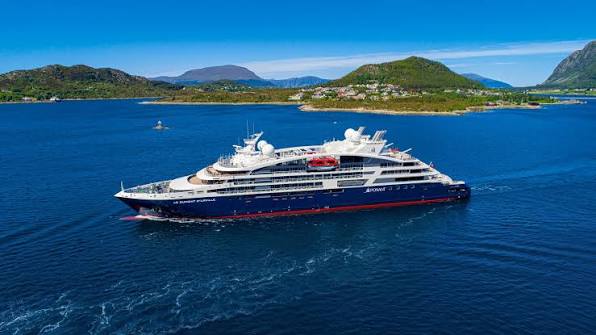
Scenic Spirit accommodates just 68 guests in 34 sumptuous balcony suites, a supremely luxurious way to explore the Mekong River.
Boasting a crew-to-guest ratio of almost 1:1, along with
facilities including a swimming pool, steam sauna and open-air
cinema, Scenic’s first foray on to the Mekong is a beautiful vessel
with the feel of a small boutique hotel.
On 6 August 1945 the world witnessed the terrifying power of nuclear weapons for the first time, unleashed on the unsuspecting Japanese city of Hiroshima. The modern city's sobering Peace Memorial Park commemorates that fateful day, which left more than 140,000 dead.
Miyajima island, officially known as Itsukushima, is famous for its incredibly photogenic torii (shrine gates) which seem to float above the water. Renovation work beginning in June 2019 means that the gates will be obscured by scaffolding for a couple of years, but the shrine itself will remain open.
On 6 August 1945 the world witnessed the terrifying power of nuclear weapons for the first time, unleashed on the unsuspecting Japanese city of Hiroshima. The modern city's sobering Peace Memorial Park commemorates that fateful day, which left more than 140,000 dead.
Said to be Japan’s sunniest city, Okayama is situated on the northern shore of the Seto Inland Sea, near to the bridge that links the islands of Honshu and Shikoku. The city is known for its impressive black castle, which overlooks the stunning Koraku-en gardens.
Said to be Japan’s sunniest city, Okayama is situated on the northern shore of the Seto Inland Sea, near to the bridge that links the islands of Honshu and Shikoku. The city is known for its impressive black castle, which overlooks the stunning Koraku-en gardens.
The elegant Himeji-jo, with its five-storey main keep, moats and defensive walls, is renowned as Japan’s most beautiful surviving feudal castle. The castle is a UNESCO World Heritage Site, and was built in 1580 by the powerful general and samurai warrior Toyotomi Hideyoshi.
Osaka, Japan’s third largest city, is a pulsating commercial hub, famous for its food, and the cityscape rivals Tokyo for neon-lit futurism. If you need respite from the urban sprawl seek out Osaka Castle and the surrounding Nishinomaru Garden, a particularly pretty spot during the cherry blossom season.
Wonderful Kyoto is Japan’s cultural and spiritual heart, scattered with tranquil gardens, traditional teahouses and some 2,000 temples and shrines. If you want to really get under the skin of Japanese culture then this is the place to come, with the chance to learn about everything from the importance of cherry-blossom season to the latest trends in manga.
In a state of constant renewal and forever looking to the future, densely populated Tokyo is a dazzling introduction to Japan and its utterly unique culture. With more neon than Las Vegas and more Michelin stars than Paris, it’s a real assault on the senses.
Saigon, as it was known then, was the capital of the South during the Vietnam War, and American-style capitalism has been embraced more enthusiastically here than in the North, with a clutch of shining skyscrapers standing as testament to Vietnam’s surging economic growth.
Cai Be is home to a fascinating floating market, and it’s a great place to observe life along the Mekong. You can learn about the production of rice paper, coconut candy and whisky, and take a trip along the backwaters on a little two-person rowing boat.
The riverfront town of Sa Dec is one of the most appealing destinations in the Mekong Delta, a laid back and peaceful place where boats laden with flowers from the nearby markets ply the waterways, overlooked by beautiful old French colonial villas.
Cambodia’s lively, youthful capital has shown a remarkable resilience in bouncing back from the horrors of the Khmer Rouge regime. The beautiful Royal Palace and Silver Pagoda shouldn’t be missed, while the former Tuol Sleng prison is a harrowing reminder of Phnom Penh’s recent past.
Oudong was once the capital of Cambodia, and served as the royal residence for over 250 years until it was abandoned by King Norodom in 1866. The twin peaks of Phnom Oudong mountain are scattered with Buddhist stupas, and offer great views of the surrounding countryside.
Cambodia’s lively, youthful capital has shown a remarkable resilience in bouncing back from the horrors of the Khmer Rouge regime. The beautiful Royal Palace and Silver Pagoda shouldn’t be missed, while the former Tuol Sleng prison is a harrowing reminder of Phnom Penh’s recent past.
A visit to Kampong Cham will give you an insight into life in a provincial Cambodian city, well off the normal tourist trail. Situated on a bend in the Mekong river, the city is known for its quirky bamboo bridge which is rebuilt every year, and there are also some interesting temples nearby.
The town of Siem Reap is a pleasant enough place in its own right, but that’s not why so many people flock here; this is the gateway to the sprawling ruins of Angkor, the spectacular seat of the ancient Khmer empire.