
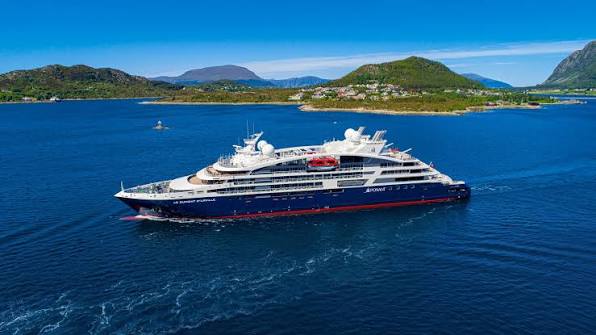
From Copenhagen to New York · Northern Europe · 43 nights
From Copenhagen to New York
Azamara Journey, Quest, Pursuit and Onward are excellent small ships that offer a welcoming and relaxed club-like atmosphere.
Azamara’s fleet of small ships are focused on providing
destination immersion by spending as much time in port as possible
with itineraries designed to include overnight stays and late
evening departures. Enjoy more time to discover the local culture
and when back on board relax and enjoy a vibrant array of
inclusions.
With a history that dates back to 1043, this small city is full of historic landmarks, significant buildings and interesting sights and museums. It is of course also a history that sits alongside the height of modern Danish design. It is great to explore on foot, by bicycle or by water. Be sure to visit Amalienborg Palace and to walk down the famed shopping street (Strøget). The pretty harbour of Nyhavn is a great location to stop for coffee or lunch and watch the world go by. And of course highlights include the Tivoli Gardens, and the (surprisingly) tiny statue of The Little Mermaid.
The charming UNESCO-listed town of Visby is the capital of Gotland, the largest island in the Baltic. The photogenic cobbled streets and ruined Gothic churches are a reminder of the island’s fascinating history, invaded by both Germans and Danes and decimated by the Black Death in the 14th century.
The buzzing city of Stockholm is the capital of Sweden. Many sights will delight; the busy waterfront, the cobbled streets in the Old Town, and the museums, palaces, gardens and galleries. And of course, just 20 minutes away, its archipelago of 30,000 islands offers a totally different experience.
Situated on the west coast surrounded by thousands of islands, Turku is Finland’s oldest city and was once the nation’s capital. This history is still visible in the medieval castle and impressive cathedral, and the city’s large student population means that there is a vibrant cultural scene.
Finland’s lovely capital Helsinki is a maritime city, with the sea on three sides and almost 100 kilometres of shoreline, as well as around 300 islands. Its contemporary architecture and focus on modern design sit surprisingly well alongside its four hundred year history.
The historic harbour city of Tallinn in Estonia is really quite captivating. Just the perfect size to explore on foot, its medieval (and UNESCO listed) town centre, with its cobblestone streets and a busy Town Hall Square, is the perfect introduction to Estonia’s rich history.
Riga, Latvia’s charming capital, is a highlight of any Baltic itinerary. The compact Old Town delights with its winding lanes and elegant spires, and the city is also home to one of Europe’s most impressive ensembles of Art Nouveau architecture.
Klaipeda is Lithuania’s only major seaport, and served for a time as the capital of Prussia, when it was known as Memel. There is still a noticeable Germanic flavour to the architecture of the old town, and it’s only a short distance from both the spectacular dunes of the Curonian Spit and the lovely seaside town of Palanga.
The Baltic port of Gdansk occupies an important place in 20th century history; the first shots of World War II were fired at the Westerplatte naval base, and it was amongst the shipyards of Gdansk that the Solidarity movement was born in the 1980s.
The ruggedly handsome island of Bornholm lies way out in the Baltic, closer to Sweden and Poland than the Danish mainland. It’s the sunniest place in Denmark, known for its intriguing rundekirke (round churches), sleepy fishing villages, traditional smokehouses and fantastic foodie scene.
The former Hanseatic port of Wismar is one of the Baltic’s lesser known gems. The town was under Swedish control for most of the 16th and 17th centuries, and there are still many reminders of this period as you stroll around the pretty UNESCO-listed old town, with its cobbled streets and gabled facades.
Falmouth has one of the deepest natural harbours in the world, and you can learn about the town’s seafaring heritage at the excellent National Maritime Museum. There are some lovely pubs, cafés and seafood restaurants here, and it’s also a good base for exploring Cornwall’s south coast.
The city of Dublin has something for everyone with great shopping, beautiful Georgian architecture, lovely parks, galleries and museums. Everywhere you go you will be bowled away by the jovial Irish welcome. Don’t miss the chance to sample a local pint of Guinness.
The 1998 Good Friday Agreement was a watershed moment for Northern Ireland, and its rejuvenated capital is enjoying a surge in popularity. The new Titanic Belfast museum is the star attraction, while the city centre boasts some handsome Victorian architecture and a lively pub scene.
Tórshavn, named after the Norse god Thor, is one of the world’s smallest capitals, with a population of just 20,000. The brightly coloured facades and turfed roofs lend the harbour an attractive, storybook quality, and the narrow streets are home to some atmospheric pubs and cafés.
This little fishing village enjoys a fine setting amongst Iceland’s Eastfjords, looking out across the water towards the dramatic Hólmatindur mountain. Life here has always been shaped by the sea, and you can learn more about Eskifjörður’s history at the interesting Maritime Museum.
The little town of Húsavík, on Iceland’s north coast, enjoys a picturesque setting just across the bay from the imposing Húsavíkurfjall mountain, and is known as Iceland’s whale watching capital. It’s also not far from the fascinating Lake Mývatn if you would prefer to take a land-based excursion.
Akureyri is Iceland’s second city, though with just 18,000 inhabitants it’s really more of a small town. Situated on the north coast at the head of Iceland’s largest fjord, it’s a cute and quirky place that also serves as a base from which to explore the bubbling mud pools and lunar landscapes around Lake Mývatn.
Ísafjörður is the largest town in Iceland’s wild Westfjords, dramatically located on a spit of sand hemmed in by mountains on three sides. The town itself is fairly low key, and the main attraction is exploring the surrounding landscapes, such as the spectacular Hornstrandir Peninsula.
Capital of Iceland and gateway to this extraordinary volcanic island, modern Reykjavík is home to an impressive collection of interesting attractions and places of historic significance. Visit the impressive Hallgrímskirkja church, relax in a thermal pool, potter around the old harbour, and enjoy 24 hour daylight in the summer months.
The spectacular Prince Christian Sound provides a protected passage for ships rounding the southern tip of Greenland, at times narrowing to just 1,500 feet across. Waterfalls cascade down the rugged mountain sides, and you can often spot whales and seals amongst the icebergs.
Nanortalik is the southernmost city in Greenland, and sits on a small island at the mouth of the Tasermiut fjord. The name means ‘the place of polar bears’, since bears come to hunt on the sea ice in summer, and the town is also known for its unique choir singing culture.
Qaqortoq is southern Greenland’s largest town, though with just 3,000 inhabitants it’s hardly crowded. A trip to the nearby hot springs at Uunartoq is recommended; relaxing in the 38°C water and watching icebergs drift across the bay is quite something.
Greenland’s capital and largest town, Nuuk is positively cosmopolitan compared to the rest of this remote and isolated country. The setting amongst mountains and fjords is striking, and attractions include the Greenland National Museum and the picturesque Old Harbour.
Newfoundland’s capital is a laid back city with an arty vibe, situated on a dramatic harbour. The hilly streets lined with colourful row houses make for a great photo opportunity, and the downtown area is full of history, as well as some excellent pubs and a thriving folk music scene.
The natural harbour at Halifax is the second largest in the world after Sydney, and this charming city has a proud maritime heritage. Take a stroll along the historic waterfront, delve into the vibrant arts scene or explore the beautiful coastal scenery of Nova Scotia.
Lunenburg’s UNESCO-listed old town is the best surviving example of a planned British colonial settlement in North America, with its picturesque wooden buildings dating back to the 18th and 19th centuries. You can also see a replica of the famous schooner Bluenose, an icon for Nova Scotians, which was built at the port.
The vibrant maritime city of Portland is a culinary and cultural hotspot, with some fantastic restaurants, a thriving craft beer scene and a host of trendy galleries and shops. Lobster lovers will be in heaven, while history buffs will enjoy strolling the handsome Victorian streets of the Old Port district.
Boston is one of the oldest cities in the USA, and in amongst the skyscrapers are plenty of red-brick buildings, a Georgian architecture that lends the city a distinctly European feel. Boston is also home to a wealth of cultural riches, including the superb Museum of Fine Arts, as well as the world famous Harvard University.
Newport is one of New England’s most appealing towns, with a well preserved colonial centre and an illustrious history. This was the holiday destination of choice for wealthy families in the 19th century, and their magnificent clifftop mansions along Bellvue Avenue are a real sight to behold.
The Big Apple is one of the world’s most iconic, cosmopolitan cities, a place that everyone should visit at least once in their lifetime. From the lofty heights of the Manhattan skyscrapers to the hipster hangouts of resurgent Brooklyn, New York City buzzes with energy and excitement, and there’s never been a better time to visit.