From Budapest to Zurich · Europe (River) · 28 nights
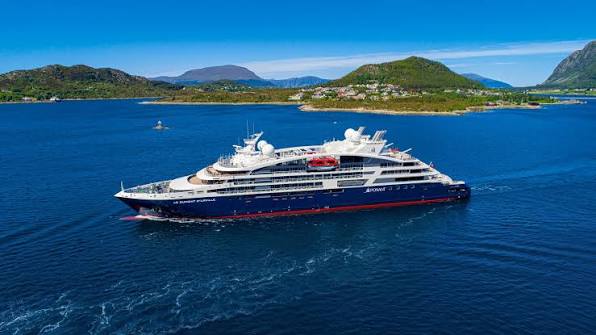
Scenic’s original Space-Ships, Ruby and Pearl, accommodate 159 guests and offer a luxurious way to explore the great rivers of Europe.
Sleek and contemporary, with an extensive list of onboard
inclusions, Scenic’s aptly named Space-Ships are renowned for their
high levels of personal service, relaxed ambience and inviting
public areas.
Budapest is one of Eastern Europe's most appealing cities, a vibrant and welcoming capital that straddles the Danube. The history of Budapest has been somewhat turbulent - ransacked by the Mongols in 1241, occupied by the Ottoman Turks for over a century, and almost flattened by the Soviets in 1945 - but plenty of older buildings survive, including the imposing Parliament and iconic St Stephen's Basilica. Although a pedant might point out that Budapest has only really existed since 1873; up until then the city's two distinct halves, Buda and Pest, were separate towns.
Formerly the centre of the Habsburg Empire, Vienna is as grand a European capital as you can imagine, jam packed full of thrusting, bombastic buildings that stand as a reminder of Austria’s glorious imperial heyday.
Krems sits on the river Danube at the eastern end of the beautiful Wachau Valley, surrounded by vineyards. It’s an attractive old town, with pretty cobbled streets and a good selection of galleries and museums, as well as some excellent restaurants.
One of the prettiest towns in Austria’s Wachau Valley, little Dürnstein charms visitors with its handsome 16th century architecture. Richard the Lionheart was once imprisoned in the castle that sits on the hillside above the town, and the region is also famous for its wine.
The pretty Bavarian town of Passau, situated close to Germany’s border with Austria, enjoys a unique setting at the confluence of three rivers: the Inn, the Ilz and the Danube. The narrow cobbled streets of the handsome old town, the Altstadt, are quite delightful.
Originally founded by the Celts and later an important Roman settlement, Regensburg is one of Bavaria’s lesser known gems. Situated on the northernmost bend of the Danube, it’s a friendly and laid back city, with an exceptionally well preserved medieval centre.
Nuremberg, Bavaria’s second city, first pops up in the history books in 1050 as a stronghold of the Franks, and later became the unofficial capital of the Holy Roman Empire. Nowadays the city is a tourist magnet thanks to the beautifully restored old town, Christmas markets and excellent beer.
Bamberg’s eye-catching, UNESCO-listed old town is one of the most beautiful in all of Germany. The city was briefly capital of the Holy Roman Empire, and the city centre is still dominated by the 13th century cathedral. There are also plenty of breweries, and you shouldn’t leave without trying Bamberg’s famous smoked beer.
The handsome town of Würzburg, situated on the river Main between Nuremberg and Frankfurt, was ruled for centuries by a succession of powerful prince-bishops. Although much of the city was destroyed during the Second World War, the majestic 18th century Residenz palace stands as a testament to the wealth of the bishopric.
The picturesque medieval town of Wertheim sits at the confluence of the Main and Tauber rivers, and is known for its castle, cobbled streets and charming half-timbered houses. The surrounding countryside is perfect for a bike ride, a gentle hike or a wine tasting tour.
The quaint little Bavarian town of Miltenberg sits on the Main river to the southeast of Frankfurt, with a beautiful old town that survived the Second World War unscathed. Timber-framed buildings lean at jaunty angles overhead, not least in the ‘Black Quarter’, where the streets are so narrow that the sunlight barely reaches ground level.
The pretty little town of Rüdesheim, situated on a bend in the Rhine surrounded by vineyards, is a popular destination for travellers looking for a slice of quintessentially German village life. The Drosselgasse, a narrow cobbled lane flanked by old timber frame buildings, is particularly atmospheric.
Cologne is a wonderfully warm and welcoming city, its skyline dominated by one of the most beautiful Gothic cathedrals in Europe. You will likely spend most of your time in the attractive Altstadt (Old Town), home to beer halls aplenty and some fascinating museums.
Amsterdam is one of our very favourite cities to visit, as well as also being a perfect base to explore the nearby landscape of windmills and dikes. There is a wealth of famous museums and galleries to choose from, such as the Van Gogh Museum, the Rijksmuseum and the Anne Frank House.
Dordrecht was first granted a town charter in the 13th century, and its importance as a merchant city is reflected in the delightful historic architecture of the old harbour. Just outside the city is the watery expanse of Biesbosch National Park, a freshwater delta criss-crossed by walking trails and cycle paths.
Antwerp is a city bound up with the arts, once home to the likes of Rubens and Van Dyck, and more recently carving out a reputation as the fashion capital of Belgium. It’s also a magnet for shopaholics, with designer boutiques and jewellers galore.
Nijmegen is one of the oldest cities in the Netherlands, and was the site of a Roman military camp in the 1st century BC. Nowadays it’s a bustling city with a charming medieval centre, home to Holland’s oldest shopping street and the fascinating Freedom Museum, which documents the Dutch experience during the Second World War.
Dynamic Düsseldorf, known for its diverse cultural scene, is a lovely place to spend a day exploring. Discover its lively and historic Aldstadt - old town - with its numerous beer halls (known as the 'longest bar in the world') or stroll along the elegant Königsallee for shopping and riverside views. For culture, there are numerous art galleries, museums, the Opera House, or the Heinrich Heine Institute.
One of the prettiest towns in the Moselle valley, Cochem is a popular stop for river cruise ships. With an old town full of half-timbered houses and a castle perched on a hill it’s a quintessentially German scene, and the riverside promenade is lovely during the sunny summer months.
The pretty town of Bernkastel lies in the heart of the Moselle wine region, and is known for its excellent dry whites based on the Riesling grape. The picturesque half-timbered houses of the old town date back to the Middle Ages, and there are plenty of wine taverns where you can enjoy a glass or two.
Koblenz was founded by the Romans, who valued the city’s strategically important location where the Rhine and Moselle rivers meet. Rebuilt from the rubble of the Second World War, modern Koblenz has a pleasant and relaxed atmosphere, and serves as a gateway to the Romantic Rhine.
The pretty little town of Rüdesheim, situated on a bend in the Rhine surrounded by vineyards, is a popular destination for travellers looking for a slice of quintessentially German village life. The Drosselgasse, a narrow cobbled lane flanked by old timber frame buildings, is particularly atmospheric.
Situated near the confluence of the Rhine and Neckar rivers, Mannheim is an important industrial centre with a lively cultural scene. It’s also conveniently located for exploring the pretty town of Heidelberg and the wine growing region around Nierstein.
Strasbourg is the capital of France’s Alsace region, right next to the border with Germany, and there is a tangible Germanic influence that sets the city a little apart from the rest of France. Highlights include the beautiful Gothic cathedral, the old town’s fairytale half-timbered houses, and the pictureque canals of the Petite France district.
Breisach is a small town on the western fringe of the Black Forest, separated from the French region of Alsace by a bend in the river Rhine. This proximity to France is reflected in a vibrant food and wine scene, and architectural highlights include the hilltop St Stephen's cathedral.
Basel lies where Switzerland, France and Germany meet, a sophisticated and multicultural city with a picturesque setting astride the river Rhine. The medieval Old Town is exceptionally well preserved, best appreciated from the summit of the hilltop cathedral, which offers incredible views across the city.