
From Santa Cruz de Tenerife to Cape Town · Africa & Indian Ocean · 20 nights
From Santa Cruz de Tenerife to Cape Town
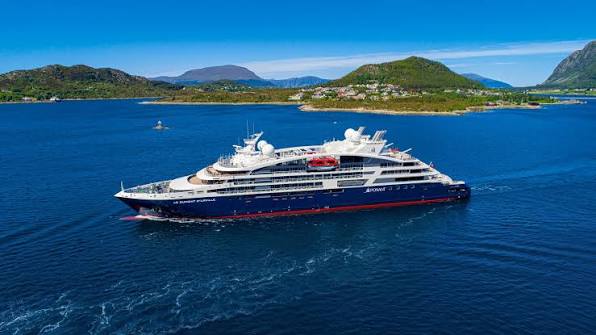
Widely acclaimed as the best ship in the world, Europa 2’s stylish Nordic décor, fantastic accommodation and great dining options make her a great choice
Europa 2 really is a ship with a difference, and you feel it
from the moment you step on board. Her beautiful light-flooded
interiors are fresh and inviting, and the feeling of space created
by innovative design is vastly refreshing. This dedication to
design is not, incidentally, confined to public areas: the elegant
suites themselves are a wonderful place to stay.
Situated on Tenerife's north eastern shore, the island's capital is a busy port that serves mostly as a gateway to the popular south west coast and the spectacular volcanic landscapes of the island's interior. There are a few attractions in the town itself, including the tree-lined Ramblas and the strikingly modern Auditorium, designed by Santiago Calatrava, but we wouldn't advise spending too much time in Santa Cruz, particularly in summer when it can get rather crowded. Head instead for the nearby UNESCO World Heritage Site of San Cristobal de la Laguna, Tenerife's former capital and the prettiest town on the island.
Said to have the world's most perfect climate, cosmopolitan Las Palmas is the capital of Gran Canaria and the largest city in the Canary Islands. The charming old quarter, La Vegueta, is where you'll find the city's most interesting colonial architecture, while beach fans should head for lovely Playa de las Canteras.
The busy, dusty streets of Senegal’s capital Dakar are filled with life and colour, noises, smells and local music. The people here are friendly and helpful, so expect a warm welcome – but watch out for the usual hustles and scams of a busy city.
Banjul is the capital of The Gambia, Africa’s smallest country, situated at the point where the Gambia river enters the Atlantic. City highlights include the National Museum and the bustling Royal Albert Market, and the nearby Tanji Bird Reserve attracts ornithologists from around the world, with hundreds of colourful species.
Luanda is a city of shocking contrasts, where conspicuous consumption fuelled by Angola’s oil boom rubs up against sprawling shanty towns. The most attractive areas of the city date back to the Portuguese colonial period, including the fortress of São Miguel de Luanda and the pleasant seafront promenade known as the Marginal.
Lobito is situated on one of Africa’s finest natural harbours, and was a thriving port during the Portuguese colonial period. The city suffered during Angola’s protracted civil war, but is bouncing back thanks to Chinese and Brazilian investment, and it’s a great place to learn about the country’s chequered history.
Walvis Bay is situated on the edge of a tidal lagoon, sheltered from the Atlantic by a long sand spit. This important wetland area is famous for its birdlife, home to one of southern Africa’s largest flamingo colonies, and it’s a short drive to the city of Swakopmund, known for its quirky German colonial architecture.
Sandwiched between the Namib Desert and the wild Atlantic coast, the geographically isolated town of Lüderitz is notable for its surreal Art Nouveau architecture. Most of these colourful buildings date back to the diamond rush period of the early 20th century, when Namibia was a German colony.
Cape Town is a magical, multicultural city where Africa meets a European-style cosmopolitan atmosphere, creating a vibrant melting pot of cultures and religions. With flat-topped Table Mountain soaring above the city, beautiful natural landscapes, and gardens within the city, you never feel far from nature here.